Key takeaways
- Aurora Heights started in 1957 with bungalows on galvanized and cast iron, and copper took over as the streets filled in through the 1960s.
- Regency Acres and the Highlands are copper with cast iron or ABS drains, while the 1980s Hills of St. Andrew fall inside the Poly-B years of 1978 to 1995.
- Basement suites in 1970s houses usually need an ejector pit, proper venting and sometimes a permit, so plan them with a camera pass first.
- Five pressure districts, frost on garage lines and 130 milligrams per litre of hardness explain most of the pressure, freezing and water heater calls west of Yonge.
Aurora Heights, the bungalow subdivision of 1957
Aurora Heights was the town's first large subdivision, about 200 homes started in 1957 with the first families moving in during 1958. It runs from Orchard Heights Boulevard south to Wellington Street West and from Yonge over to Bathurst, and most of the houses date from the late 1950s to 1970. It has more bungalows than any other neighbourhood in town, with semis and two-storeys mixed in.
The earliest streets went up when galvanized steel supply and cast iron drains were still standard, and copper only took over as the subdivision filled in through the 1960s. Lead services are unlikely at these dates. What we do find are original brass stops under sinks that will not turn and cast iron stacks that are rough inside and catch everything. Plumbing Aurora checks the whole supply run before quoting, because the one fitting that failed is rarely the only one from 1958 still in the wall.
Regency Acres and the Highlands around the old golf course
Regency Acres grew through the 1960s and 1970s around the public school on Murray Drive, with detached two-storeys, semis, split-levels and bungalows. Copper supply is the rule here. Drains are cast iron in the earlier houses and ABS in the later ones, since ABS plastic was accepted into the code in the late 1970s.
Aurora Highlands, the largest neighbourhood by area, stretches from Bathurst to Yonge and from Wellington and Murray Drive down to the GO rail line, with most houses from the 1970s and 1980s. The golf club at its heart, open since 1931, was sold in 2014, a 2015 proposal for 184 lots and a ten-storey condo was settled at the Ontario Municipal Board in 2016, and Highland Gate Central Park opened on the old course in 2023 beside the Allegro homes. The contrast shows on our calls: a 1975 split-level with its original cast iron a fence away from a house whose supply is PEX.
The Hills of St. Andrew and the Poly-B years
The land around Bathurst and St. John's Sideroad stayed farmland until the 1980s, then filled in beside St. Andrew's College, the boys' school that has sat on its 126-acre campus on Yonge Street since 1926. The houses are mostly from the 1980s, on hillside streets, with ABS drains and either copper or Poly-B supply.
Poly-B is the grey plastic pipe sold in Ontario from 1978 to 1995, and the Hills of St. Andrew sit squarely in that window. The pipe tends to outlast its fittings, which crack and weep at the joints, and a house that has had two or three drips in different rooms is telling you something. Plumbing Aurora looks for Poly-B at the water heater and under the basement ceiling on every call in this neighbourhood, and prices a whole-house swap to PEX as one planned job rather than a run of patches.
Basement bathrooms and in-law suites in 1970s houses
Nearly every house from the Heights to the Highlands has a full basement, and the newest wave of work down there is the in-law suite or rental unit. The Town's 2023 Official Plan calls that gentle intensification, growth inside the neighbourhoods that already exist, on the way to 85,800 residents by 2051. Close to a fifth of homes in town are rented.
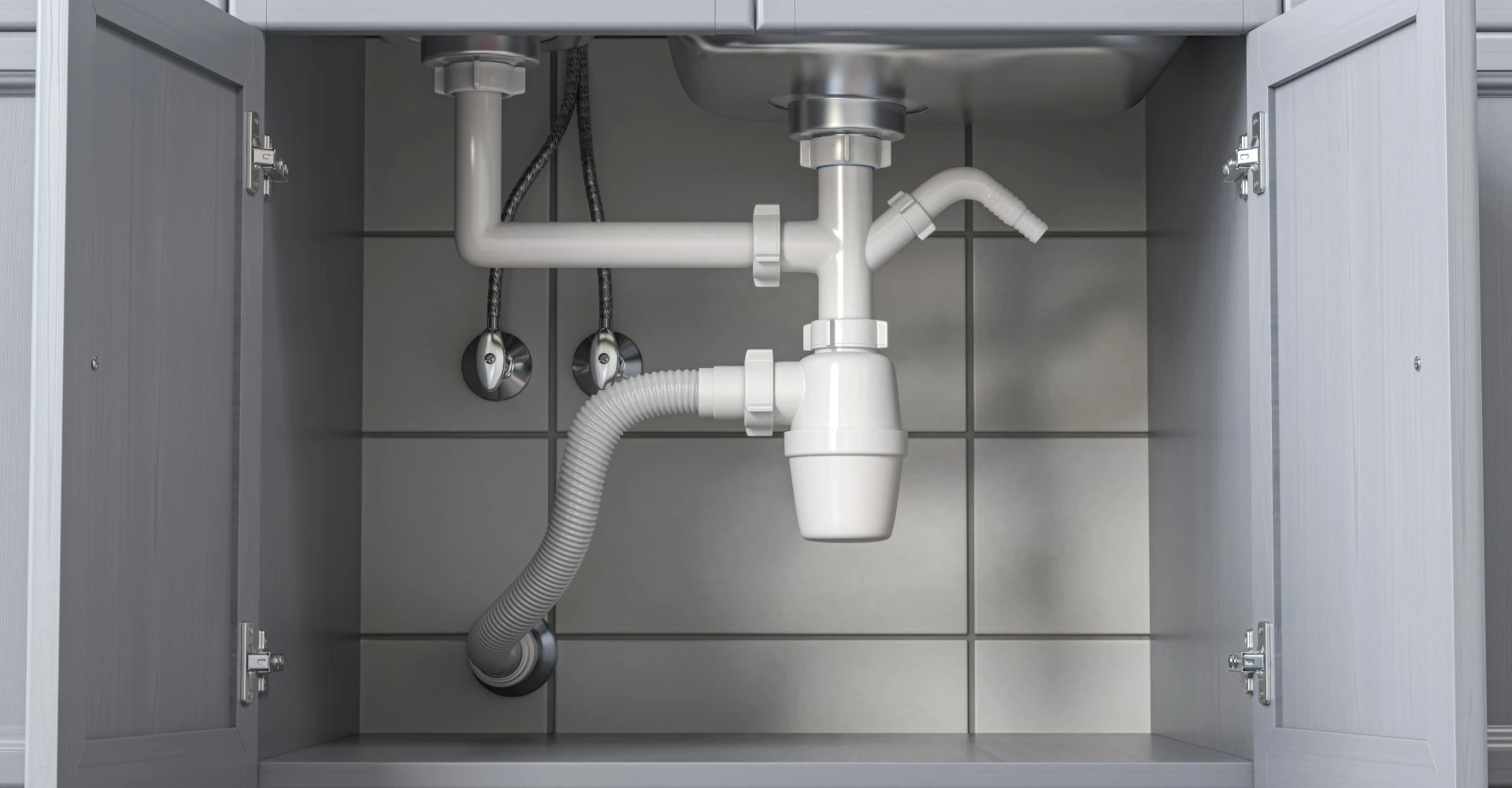
The catch in a 1970s house is the depth of the drain. The house drain often leaves through the wall above slab level, so a basement toilet needs a sealed ejector pit with its own vent or a new gravity line cut deeper into the floor. A camera pass through the existing drain settles that question before any concrete is cut. Plumbing Aurora draws the fixtures where the slab cut is shortest, ties the new vents into the stack and tells you which parts of the job may need a permit.
Five pressure districts on the climb toward Bathurst
The Town owns about 250 kilometres of watermain and runs it in five pressure districts, with pressures anywhere between 40 and 100 psi across town. West of Yonge the ground rises toward Bathurst, and two streets a short walk apart can read very differently at the hose bib. A high reading wears out fill valves, washer hoses and heater relief valves, while a low one leaves the upstairs shower weak.
A gauge on an outside tap is the first thing Plumbing Aurora fits on a pressure call, and a regulator after the meter with an expansion tank at the heater is the usual answer on a high street. The Town buries its mains under 1.8 metres of cover so they never see frost, but the line to a garage tap or through an unheated garage wall sits far above that, and January nights here average minus 10 with a record near minus 32. Those lines freeze first, split quietly, and show themselves at the thaw.
Hard water and the house on its third water heater
The water in these houses is a blend of local groundwater from several deep wells and Lake Ontario water piped up through the Region. The groundwater is naturally high in minerals, and the Region's figure for the town this past quarter is 130 milligrams per litre of hardness, inside its Hard band, or roughly seven and a half grains per gallon.
A bungalow from 1958 or a split-level from 1972 has been through two or three water heaters by now. Sediment settles on the tank floor, pops and rumbles as it heats, and insulates the burner from the water until the element or the bottom seam gives out. Plumbing Aurora checks the anode and flushes the tank on a maintenance visit, and talks softener before the fourth heater goes in. A tankless unit works here only with a softener or a scale filter ahead of it.
Neighbourhoods in this area
Services for this area
Repiping
Need Repiping in Aurora? Plumbing Aurora upgrades old piping and confirms everything holds under pressure. Schedule a quote.
Basement Plumbing
Need Basement Plumbing in Aurora? Plumbing Aurora installs and repairs fixtures and drains below grade. Schedule service.
Water Pressure Regulator
Need Water Pressure Regulator in Aurora? Plumbing Aurora sets and tests pressure so plumbing works smoothly. Book service.
Frozen Pipe Repair
Need Frozen Pipe Repair in Aurora? Plumbing Aurora repairs split lines and verifies pressure and flow. Schedule service.
Water Heater Installation
Need Water Heater Installation in Aurora? Plumbing Aurora installs new water heaters and verifies safe operation. Book installation.
Water Softeners
Need Water Softeners in Aurora? Plumbing Aurora handles the work cleanly and verifies everything is working right. Book today.
FAQ