Key takeaways
- The heritage district and the Village south of Wellington hold houses from the 1860s to the 1930s, so galvanized supply, cast iron drains and lead services are common.
- Any house here that predates the mid-1950s may still be fed through a lead service, and the answer is new copper from the curb stop to the meter.
- Machell Park and Wellington Street West flood in heavy storms, so sump pumps, backwater valves and disconnected downspouts matter more here than anywhere else in town.
- Infill at Yonge and Wellington and the GO expansion mean old services and new connections will share the same streets for years to come.
From Machell's Corners to a heritage district
Richard Machell opened his store at Yonge and Wellington in 1804, and the crossroads carried his name until the village became Aurora in 1854. The railway reached the corner in 1853 and the village grew north of Wellington on the strength of it. The houses that survive from those years make up the Northeast Old Aurora Heritage Conservation District, about 20 hectares of buildings from the 1860s to the 1930s, in styles from Ontario Victorian vernacular to Craftsman bungalows. The Town adopted the district plan in 2006.
South of Wellington the Village is a mix of 1920s and 1930s frame houses, small brick and frame bungalows, and ranch and split-level houses from later decades. The common thread for a plumber is age. A house from before 1960 that was never gutted still carries the supply, drain and venting of its first owners, and that is where our work in this part of town begins.
Lead services and the Region's advice
York Region has found no lead at detectable levels in the water it supplies and owns no lead service lines, so any lead at a tap in the heritage district comes from the house itself. The Region's guidance is plain: a house from before the mid-1950s is probably fed through a lead service pipe, and solder used before the 1990s may contain lead. Most of the Village and the whole heritage district fall inside that first window.
Until the pipe is replaced, the Region advises running the cold tap for about a minute after the water has sat for hours, using cold water for drinking and for formula, and remembering that boiling does nothing to remove lead. The Town's 2025 report shows all sixteen distribution samples below the detection limit, but no samples were taken inside homes. Plumbing Aurora replaces a lead service from the curb stop to the meter in copper and swaps the old brass fittings at the same time, since those can carry lead too.
Galvanized supply, cast iron drains and plaster walls
Before the 1960s, supply pipe in these houses was galvanized steel. It rusts from the inside, so the bore narrows year by year until the upstairs shower runs at a trickle while the basement tap runs fine. Threads go brittle, and a fitting that looks solid can snap when a wrench touches it. Drains were cast iron until ABS plastic entered the code in the late 1970s, so a 1920s house usually has a cast iron stack and often clay tile once the drain leaves the foundation.
The walls add their own complication. Plaster on wood lath cracks when it is cut and does not patch like drywall, and the pipe sizes inside are often odd ones that no modern fitting matches without an adapter. Plumbing Aurora measures before cutting, opens the smallest hole that does the job and runs new PEX or copper through closets and the basement ceiling wherever it can. You see the old pipe we remove and get the reasons in writing.
Tannery Creek, Machell Park and Wellington Street West
Tannery Creek runs through this part of town on its way to the East Holland River, and the Town looks after more than 80 kilometres of creeks and drainage features in all. The low ground around Machell Park has a long record: backyards flood in heavy storms, and the park's neighbours have seen wet basements again and again across several decades. The Town's 2020 flood relief study counted 259 buildings at risk across town, 230 of them homes, and proposed an underground storage tank in the park to hold back storm water.
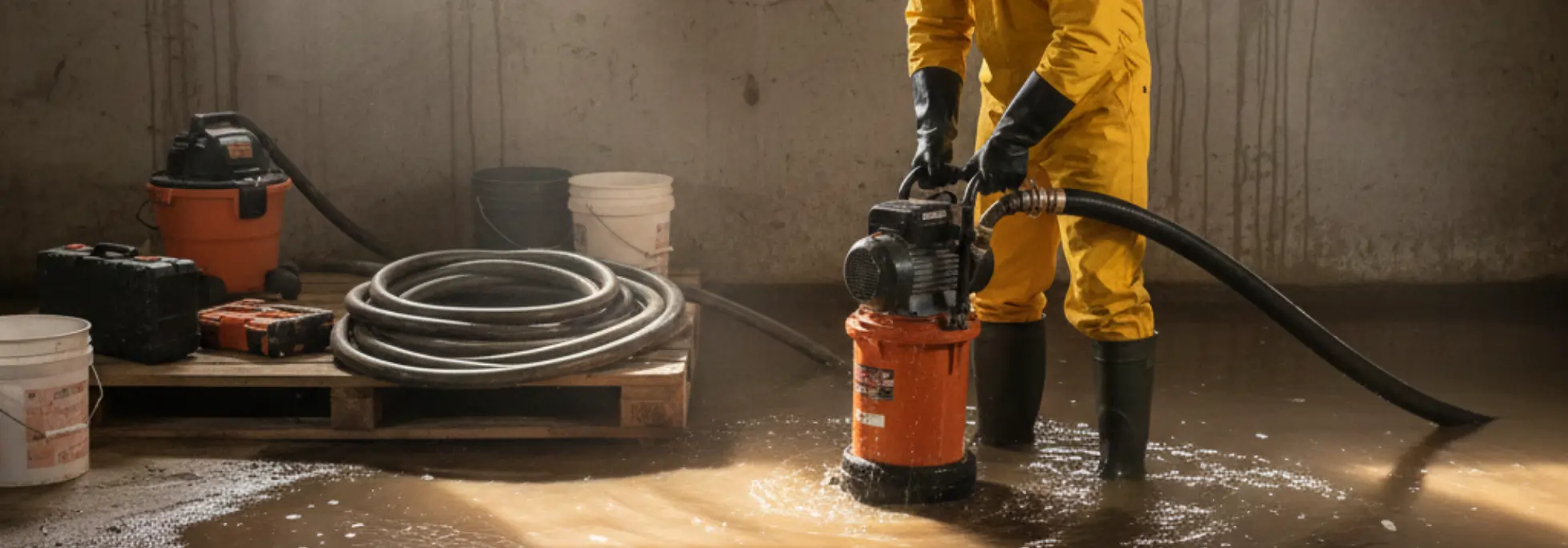
Wellington Street West floods in the same storms and has stranded cars more than once, including one rainstorm not long before the study that put the street under water just west of Yonge. Water standing on the road finds the nearest low basement through window wells, reverse-slope driveways and old weeping tile. No Town or Region subsidy exists for a sump pump or backwater valve, so the protection is yours to arrange. Plumbing Aurora fits sump pits with a frost-safe discharge, installs backwater valves where the sanitary line leaves the house and redirects downspouts that still run to the sewer.
Infill, townhouses and the GO station
Temperance Street and Town Park are two of the four areas the Town calls stable neighbourhoods, with design guidelines for additions and replacement houses. Owners there tend to renovate within the old shell, which keeps the plumbing work inside the house and often brings an addition or second bathroom onto a drain laid a century ago. Larger work of that kind may need a permit, and the pipe must meet the Ontario Building Code even when the house predates it by decades.
Right beside the heritage houses, the corner itself is changing. A 126-unit stacked townhouse project was approved on the northwest corner of Yonge and Wellington, and the former Canadian Tire site on Yonge was cleared by the Ontario Land Tribunal for up to 900 units. The GO station at 121 Wellington Street East has seen trains since 1853 and has been getting a second track since August 2023. New connections to old mains, deeper excavations beside century-old services and more people on the same sewers all mean the pipes in this part of town will be opened up more often, not less.
Neighbourhoods in this area
Services for this area
Lead Pipe Replacement
Need Lead Pipe Replacement in Aurora? Plumbing Aurora replaces lead lines and verifies pressure and water flow. Schedule a quote.
Repiping
Need Repiping in Aurora? Plumbing Aurora upgrades old piping and confirms everything holds under pressure. Schedule a quote.
Drain Cleaning
Need Drain Cleaning in Aurora? Plumbing Aurora clears slow or blocked drains and checks flow. Book a visit.
Basement Waterproofing
Need Basement Waterproofing in Aurora? Plumbing Aurora improves drainage and waterproofing so water stays out. Book an assessment.
Mainline Backwater Valve Installation
Need Mainline Backwater Valve Installation in Aurora? Plumbing Aurora installs and tests backwater valves for safer drainage. Book today.
Plumbing Excavation Services
Need Plumbing Excavation Services in Aurora? Plumbing Aurora excavates and repairs plumbing lines with clean site restoration. Request an appointment.
FAQ